
Sponsored

Advertorial

Flexible Seating for New Work Environments

Mobile and easy-to-move to where it's needed: the FULD folding chair, designed by Stefan Diez for Herman Miller, adds a missing element to existing workspace typologies.

Flexible Seating for New Work Environments
© Herman Miller

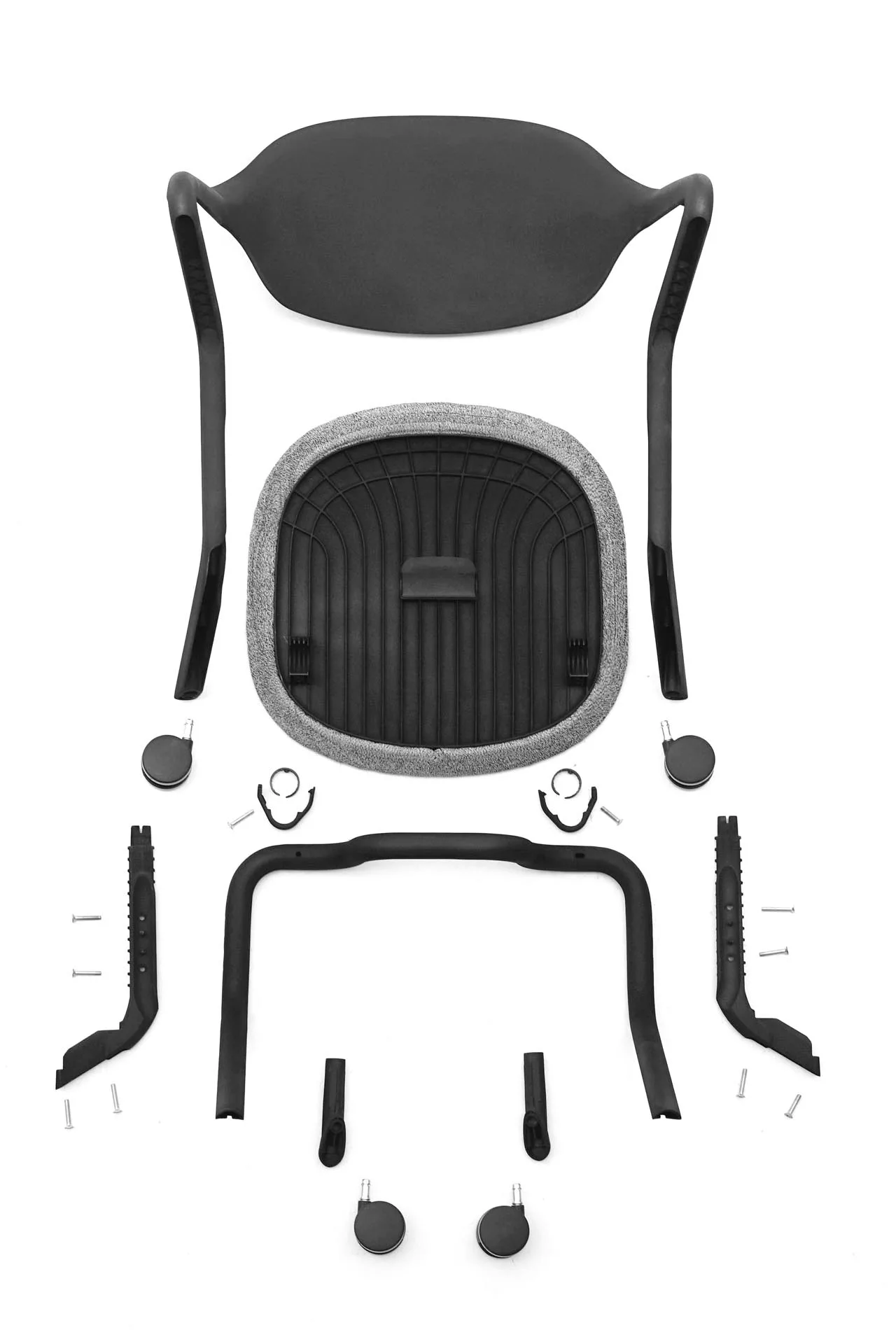
Comfort and flexibility are no longer opposites. In the traditional office, chairs on which you can sit comfortably for a long time, usually have castors. However, this is not the case with stacking chairs: it needs quite some effort to move them around. Stacking them on top of each other also requires manpower and storage space. The comfortable castor-based Fuld folding chair supports flexible application and can be easily pushed aside.

Das optionale 3D-Strick-Polster besteht zu 50 Prozent aus Post-Consumer-Recyclingmaterial.
Das optionale 3D-Strick-Polster besteht zu 50 Prozent aus Post-Consumer-Recyclingmaterial. © Diez Office
Auf Praktikabilität ausgelegt durch hochklappbare Sitze und wandschonende Beine mit Rollen.
Auf Praktikabilität ausgelegt durch hochklappbare Sitze und wandschonende Beine mit Rollen. © Diez Office

Agile Furniture for the Adaptable Office

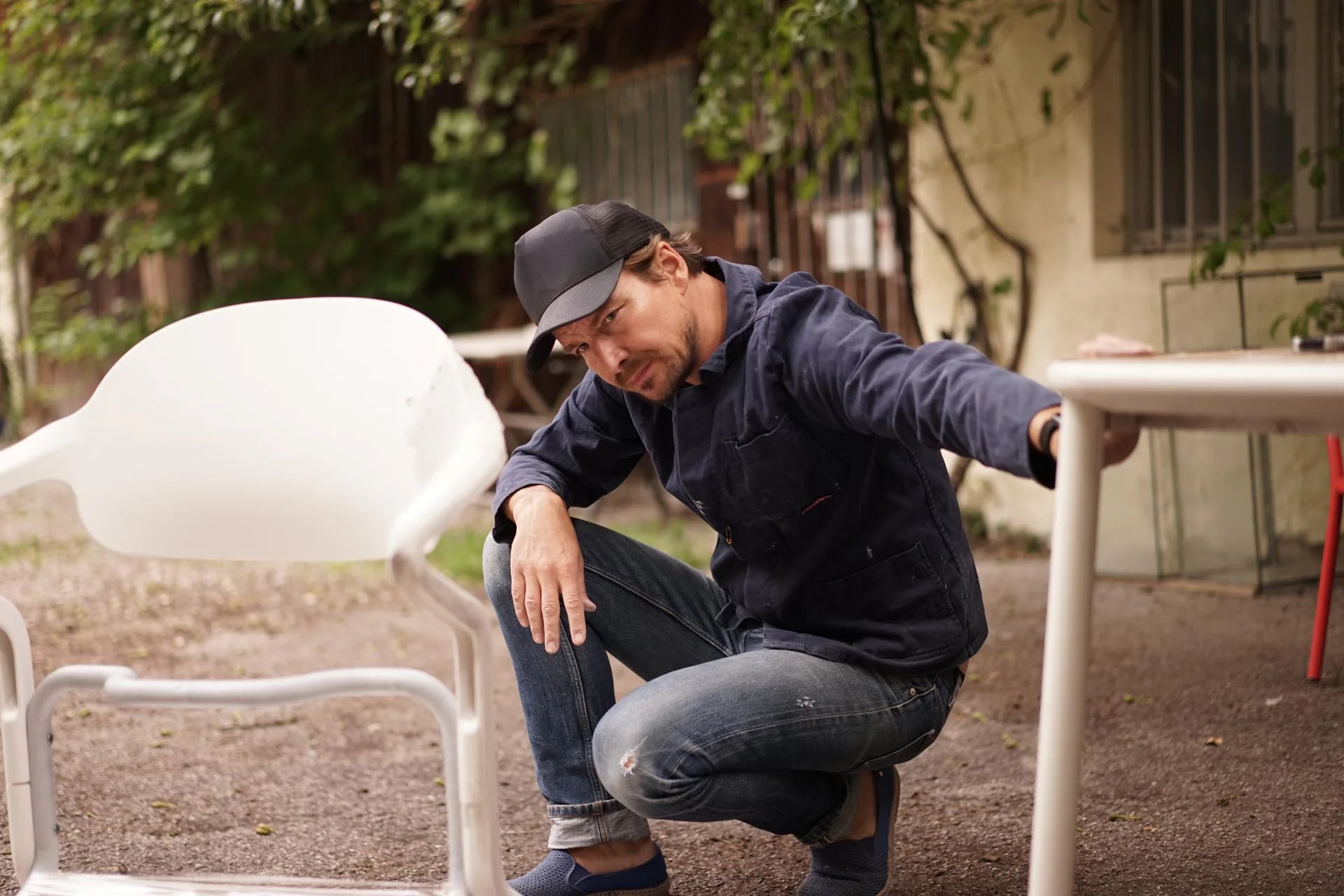
Furniture that supports agile work in self-organized teams is becoming increasingly important. This is where Fuld can play a significant role. When developing a new product, designer Stefan Diez always starts with "a kind of detective work" in the environment where the new design will be used. Today's work spaces are constantly changing: the same space where a team was collaborating, may subsequently be used for focused work by an individual, or for presentations and training sessions, with or without seating. Hence, solutions that meet hybrid requirements are in high demand.
Nachhaltig durch und durch – von den Materialien über den Herstellungsprozess bis zur Recyclingfähigkeit.
Nachhaltig durch und durch – von den Materialien über den Herstellungsprozess bis zur Recyclingfähigkeit. © Diez Office

Foldable, Comfortable and Versatile

Fuld combines form and function in a new way. The castors and the flexible backrest originate from the traditional office. The backrest and armrests are made from a single frame, ensuring a pleasant bounce and superior seating comfort. When the chairs are pushed together like shopping trolleys, the positive-negative shapes will interlock perfectly. All of this makes the first folding chair by Herman Miller a versatile companion, more comfortable and flexible than many of its predecessors.
„Design erfordert ein wenig Detektivarbeit.“ (Stefan Diez)
„Design erfordert ein wenig Detektivarbeit.“ (Stefan Diez) © Diez Office

Focus on Sustainability

Fuld represents the perfect balance of comfort, durability and lightness and the chair is also an outstanding example of sustainable product development. Designs by Diez Office are always conceived with environmentally and socially responsible production in mind. This also applies to products manufactured by Herman Miller. According to Stefan Diez, the tradition-steeped US company epitomises the values associated with sustainability like almost no other design-oriented furniture brand. The requirements and briefings for designers have become increasingly stricter. No other company, Diez notes, places so much emphasis on construction and quality.

For example, Fuld's stable structure is designed to save material; the chair is easy to repair, while the different materials can be separated by type and completely recycled, which is also supported by the special colour palette. The optional 3D-knit seat upholstery is made of 50 % recycled material. An uncompromisingly sustainable product.

More Information

Manufacturer: Herman Miller
Product: Fuld


Product category: Furniture


  • Mei architects and planners completed the Schiecentrale in Rotterdam’s Lloydkwartier in 2008. The practice is still based in the building complex to this day, and Robert Winkel also lives there.

    „We're interested in people who have ideals" 

    What qualifies architects as project developers? What values enable them to survive in the highly competitive real-estate industry? How can architectural practices use digital data to regain influence over construction processes? We speak to Robert Winkel, who works in architecture and real estate.

  • View from the entrance of two learning centres and the adjoining sports hall on the school grounds

    A Place for Personal Development  

    Classrooms are a thing of the past. At Ammersee, pupils learn in open clusters overlooking the lake. Dettinger Architects designed the school building using timber-frame construction.

  • HALBZEUG #4: Zumthor, Bawa, Nauta and Ramstad

    How often do you miss a lecture, an exhibition closing event or a panel discussion, and lose track of notable buildings, new architectural practices and trends in architecture? In episode 4, we report on our press trips, discuss the projects we've experienced and offer a little glimpse behind the scenes of a press trip.

  • View of the art district and the adjacent fjord landscape

    Art Moves to the Countryside 

    How an old commercial complex by the fjord became a branch of the Statens Museum, and why it also houses a kayak storage facility with a workshop.

  • Inclusive Centre near Barcelona

    An old textile factory was transformed into a day centre for individuals with disabilities. As a public building in the heart of the city, it represents a completely new understanding of inclusion.

  • View from the new atrium. For the first time, the central stairwell with lift provides all tenants with direct access to their offices and laboratories.

    Added Storeys Instead of Demolition 

    In Uppsala, Sweden, a 1970s office complex was facing demolition. Following its unexpected rescue, it has become a pilot project for circular construction. Anders Tväråna of White Arkitekter relatess how Lumi also became an economic success.